
Asia, Authored: FIND Global Summit 2026 Brings ZHA, Snøhetta, UNStudio and WHY to Bangkok

From the reinvention of vernacular architecture to artificial intelligence, adaptive reuse and the evolving language of hospitality, Asia is moving beyond its role as an interpreter of global design. At FIND Global Summit 2026 in Bangkok, some of the world's most influential architectural voices converge to examine a region increasingly confident in authoring its own design future. For Architects in India and its global extended platform, dsign world, this first-time media partnership marks a new chapter in connecting India's design fraternity with the international architectural dialogue.
BANGKOK, THAILAND | 26–28 NOVEMBER 2026
There is a moment in the evolution of every design culture when it stops looking outward for validation and begins to define its own vocabulary. Asia appears to be approaching that moment.
Across its rapidly transforming cities, emerging cultural institutions, hospitality destinations and increasingly sophisticated design practices, a different architectural consciousness is taking shape. It is neither a rejection of international influence nor an imitation of it. Instead, it is a more considered synthesis of local intelligence, cultural memory, material knowledge, technological advancement and contemporary ambition.
The question is no longer whether Asia can participate in the global architectural conversation. It is whether the global conversation is ready to recognise the ideas emerging from Asia on their own terms.
This is the central proposition of FIND Global Summit 2026, taking place from 26 to 28 November at Bangkok's Queen Sirikit National Convention Center, alongside the fifth edition of FIND – Design Fair Asia.
Bringing together more than 60 speakers from 17 countries, the Summit assembles architects, interior designers, hospitality leaders, developers, cultural practitioners and industry decision-makers. Its programme moves across three interconnected territories: the authority of Asian design, the reinvention of the vernacular and the increasingly important relationship between architecture, hospitality and human wellbeing.
Yet what makes the gathering particularly relevant is not simply the international stature of its participants. It is the convergence of disciplines that are often discussed separately, but which increasingly determine the quality of the built environment.
Architecture is no longer an isolated exercise in form-making. It is inseparable from material economics, environmental responsibility, technology, cultural identity, commercial realities and the experience of the people who inhabit a place.
A NEW CONNECTION: ARCHITECTS IN INDIA × DSIGN WORLD × FIND
For Architects in India (AI), the 2026 edition marks an important milestone: its first-time media partnership with FIND – Design Fair Asia.
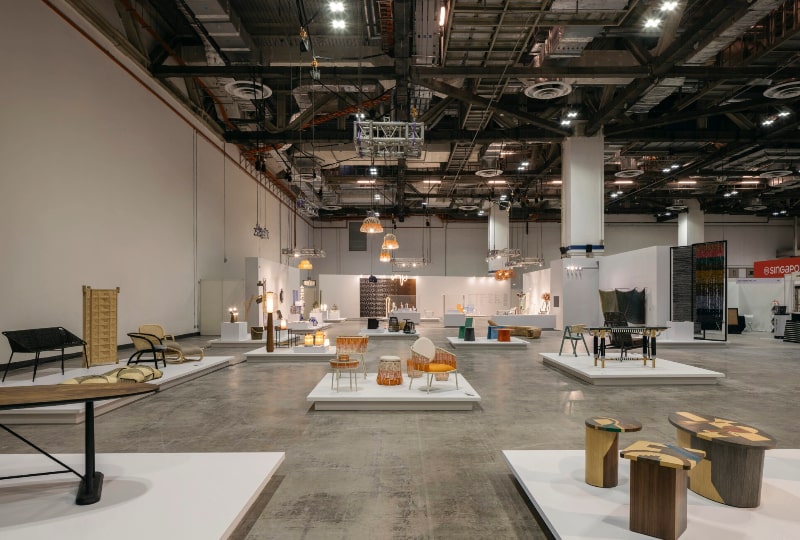
The association also introduces the international reach of Dsign world, AII's extended global architecture and design media platform, bringing the two platforms together in their engagement with the international design community.
Architects in India has developed its presence around showcasing architectural excellence, design innovation, emerging practices and the people and ideas shaping India's built environment. Through dsign world, this media vision extends beyond geographical boundaries, creating a wider platform for international architecture, interiors, materials, products and design culture.
The partnership with FIND represents a natural progression of that vision.
As Asia becomes an increasingly important centre of architectural experimentation, hospitality investment, manufacturing and creative exchange, the need for meaningful connections between regional design communities and international industry platforms becomes more apparent.
India, with its diverse architectural traditions, expanding professional ecosystem, material industries and growing international design presence, has an important contribution to make to this conversation.
Through this first-time association, AII and dsign world join FIND in bringing greater visibility to the ideas, practices and conversations shaping the region's design future.
More than a conventional event association, it represents an opportunity to build bridges between India's architectural community, Southeast Asia and the wider international design ecosystem.
And perhaps that is precisely what the next phase of architectural media should aspire to do: not simply report on where design is happening, but connect the people, knowledge and opportunities that allow it to evolve.
THE ASIAN DESIGN AUTHORITY
Beyond the blueprint
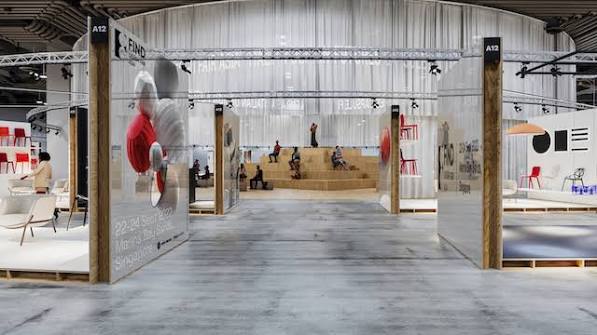
For much of the modern architectural era, the language of international design has been shaped by established centres in Europe and North America. Asian cities, meanwhile, have often been described through the speed of their development, the scale of their skylines and their appetite for imported architectural expression.
That description is increasingly inadequate.
A new generation of Asian practices is demonstrating that cultural identity, regional intelligence and contextual understanding can be powerful sources of contemporary architectural innovation.
The first Summit pillar, The Asian Design Authority, examines this changing relationship between international expertise and local authorship.
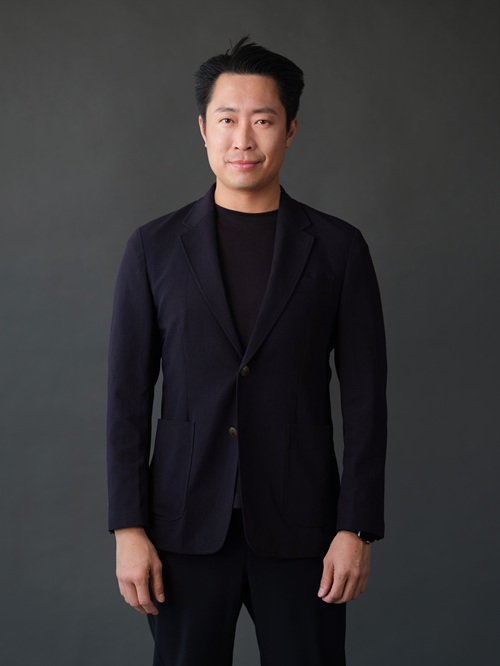
The opening keynote is delivered by Shao-wei Huang, Associate Director and Head of the Shenzhen Office at ZHA (formerly Zaha Hadid Architects), under the title Designing Beyond Boundaries. It considers architecture, intelligence and human experience in a new era.
The conversation extends into the question of how international design practices can work across different cultural contexts while preserving the identity of the places in which they operate.
In Global Expertise, Local Soul: The Future of Authentic Regional Design, senior representatives from HBA's Asian studios examine precisely this challenge.
The issue is particularly significant for Asia. Its cities are not interchangeable backdrops for global architectural signatures. They possess distinct climatic conditions, social structures, histories, craft traditions and patterns of occupation.
The most compelling architecture of the coming decades may therefore emerge not from a universal visual language, but from practices capable of interpreting these differences with sophistication.
THE NEW VERNACULAR
Salvaged. Engineered. Reauthored.
If the first conversation concerns who authors Asian design, the second asks what knowledge that authorship should draw upon.
The vernacular is often understood as a reference to traditional building forms, familiar materials and inherited construction techniques. But in a contemporary architectural context, it can be something considerably more dynamic.
It can be an evolving relationship between existing buildings and new interventions, between traditional craft and advanced fabrication, between natural resources and engineered materials.
The New Vernacular explores this territory through adaptive reuse, circularity, craftsmanship and material innovation.
Across Southeast Asia, the existing built environment offers an extraordinary resource of architectural intelligence. Traditional construction systems, passive climatic strategies, locally available materials and established craft practices can inform contemporary buildings in ways that purely stylistic references cannot.
The challenge is to translate that knowledge without romanticising the past.
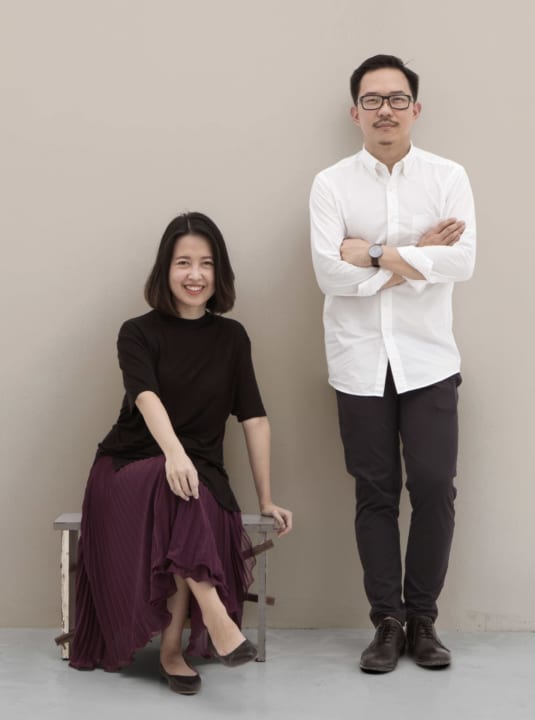
The TIDA keynote panel, Salvaged, Woven, Reauthored: Material, Reuse and Craft, brings together Korakot Aromdee of Korakot International, Decha Archjananun of THINKK Studio and Massimo Iosa Ghini of Iosa Ghini Associati.
Their discussion reflects a fundamental shift in the meaning of sustainable architecture. The objective is no longer simply to introduce environmentally responsible technologies into a project. It is to question the very premise of how materials are sourced, processed, assembled, reused and experienced.
In this sense, sustainability becomes a form of architectural authorship.
It is expressed through decisions about what to retain, what to transform, what to manufacture and what to allow nature to reclaim.
THE ARCHITECTURE OF SENSORY SANCTUARIES
When hospitality becomes a way of living
Asia has also become an influential testing ground for the relationship between hospitality, experience and architecture.
The third Summit pillar, Asia's Sensory Sanctuaries, examines how ideas once associated primarily with luxury hotels and resorts are moving into residential developments, healthcare environments and everyday domestic spaces.
The distinction between a hotel experience and a residential experience is becoming increasingly fluid. Wellness, longevity, service, material comfort and sensory design are no longer exclusive to hospitality destinations.
They are increasingly informing how contemporary environments are conceived.
The programme examines this evolution through conversations on the longevity economy, wellness-led developments and the relationship between hospitality and healthcare.
Beyond Wellness: The Rise of the Longevity Economy explores the growing influence of wellbeing on hotels, residences and mixed-use destinations. A companion discussion, Where Hospitality Meets Healthcare: Designing for Care and Longevity, considers how these principles extend into clinical environments.

In the fireside conversation When Wellness Moves In, Viri Kaur Chopra of Six Senses explores the movement of hospitality principles into the home.
For architects and interior designers, this signals a meaningful shift in priorities.
The experience of a space is no longer determined only by its visual composition. Natural light, acoustics, air quality, tactile surfaces, spatial flexibility, landscape and the ability to support physical and psychological comfort increasingly influence architectural value.
The next generation of luxury may be defined less by what a building displays and more by what it allows its occupants to experience.
FROM BUILDINGS TO PLACES
The city as a cultural experience
Architecture does not end at the building envelope. Its larger significance emerges through its relationship with the city.
As Asian urban centres continue to expand, commercial developments, retail environments, cultural institutions and public spaces are being reconsidered as instruments of placemaking.
The Summit's second day broadens the discussion from individual architectural projects to the environments in which people live, work, shop, travel and interact.
The session Can Retail Design the Next Cultural District? examines whether retail developments can move beyond transactional destinations to create enduring civic and cultural value.
This is an important question for rapidly changing Asian cities, where large commercial developments frequently occupy strategic urban locations and influence patterns of public movement.
The discussion Culture as Infrastructure: Designing Cultural Spaces That Shape the City takes this further, examining how art spaces and cultural institutions can contribute to the long-term identity of a city.
The distinction between a destination and a place is significant. A destination attracts visitors; a meaningful place creates attachment, memory and participation.
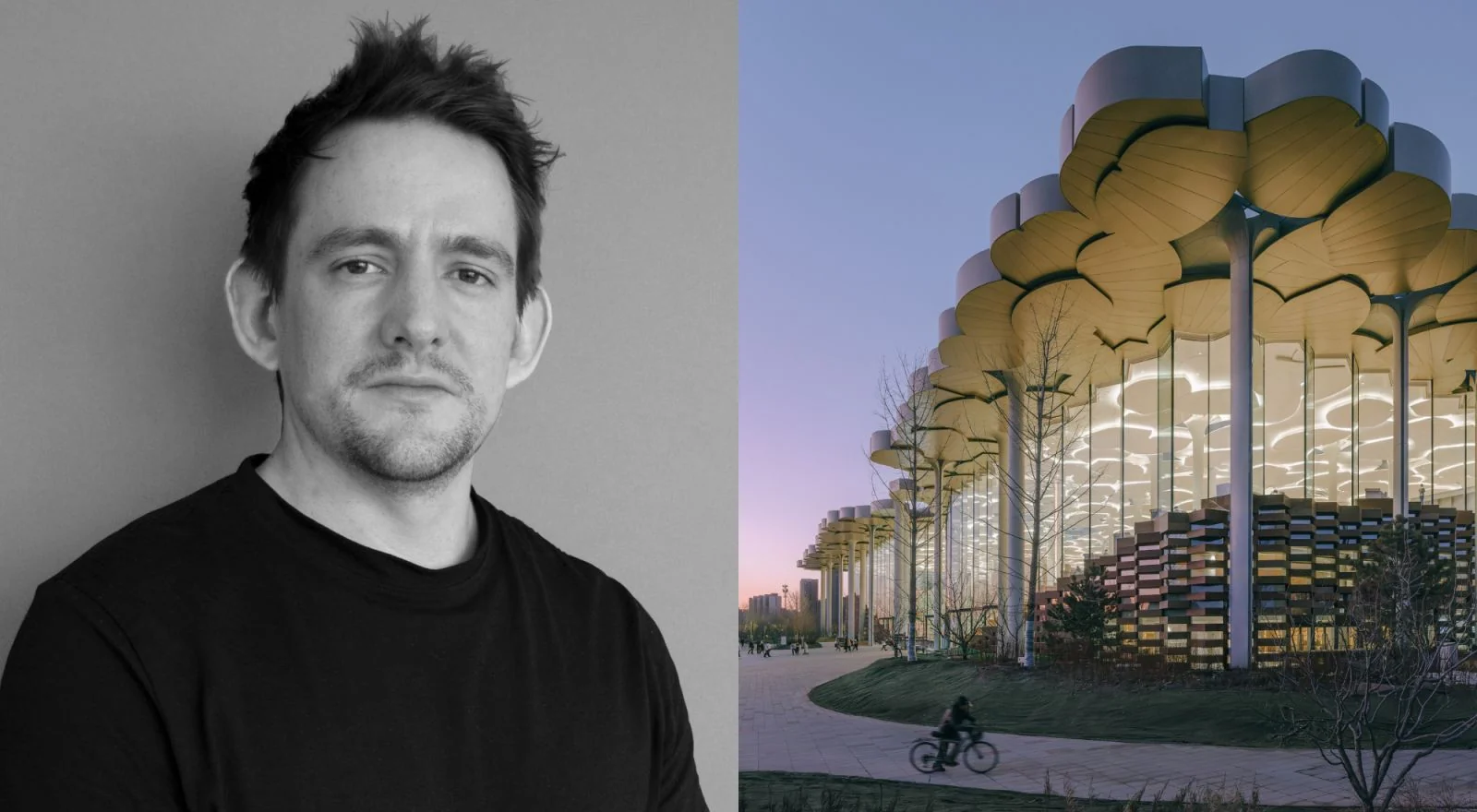
Richard Wood, Managing Director Asia at Snøhetta, opens the second day with Liberating Laughter, exploring delight, spontaneity and shared experience as conditions of design.
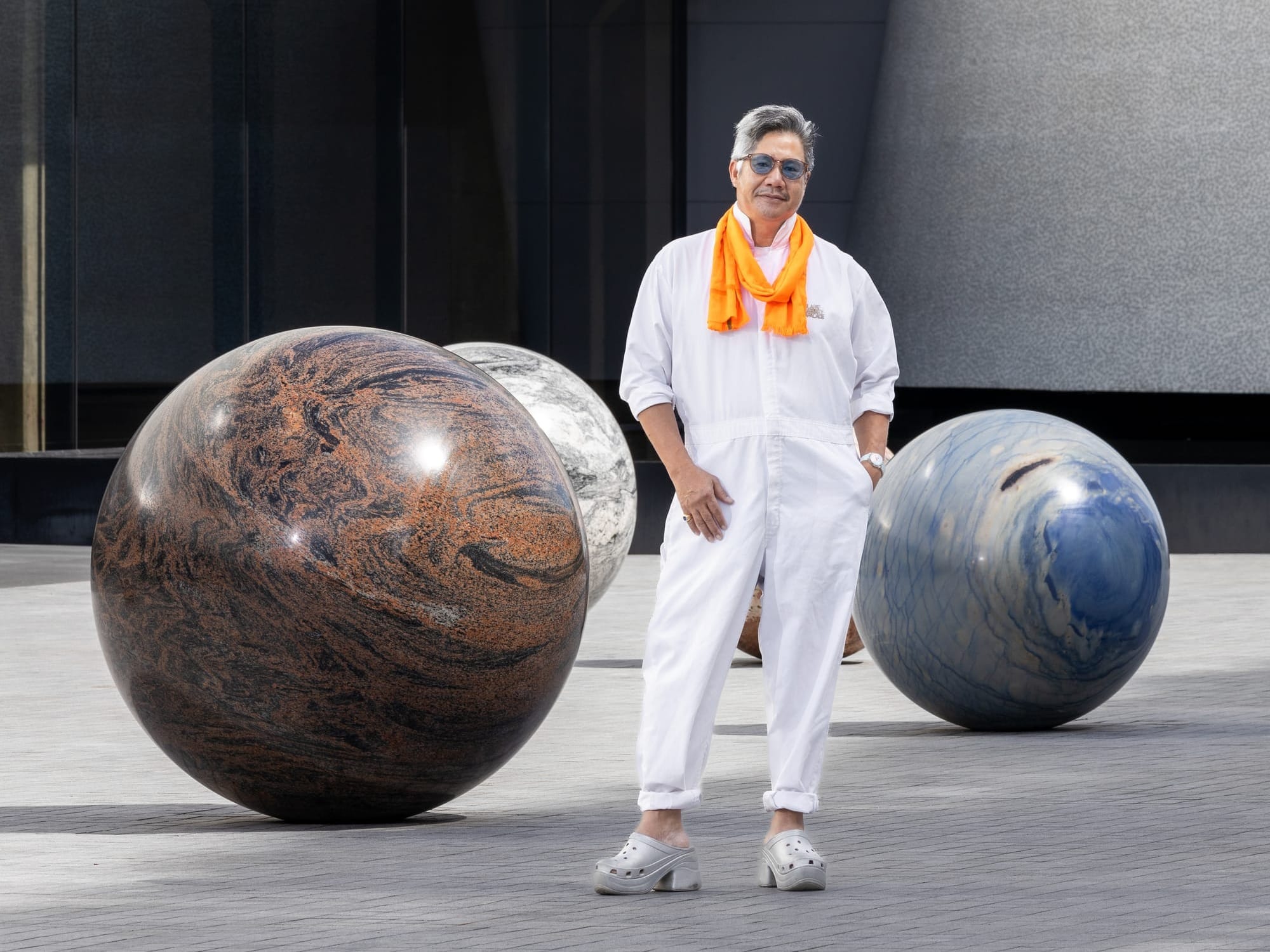
Later, Kulapat Yantrasast, Founder of WHY Architecture, presents The Future of Museum Design, examining the transformation of museums from traditional institutions for the preservation and display of art into more open and inclusive public spaces.
These discussions point towards a broader architectural responsibility: creating environments that contribute to the cultural life of their surroundings rather than functioning as isolated objects.
ARTIFICIAL INTELLIGENCE AND THE LIMITS OF AUTOMATION
Few subjects are reshaping professional practice as rapidly as artificial intelligence.
Its influence is already extending across design exploration, computational modelling, visualisation, documentation and the management of complex projects.
But the important architectural question is not simply how much faster a design process can become. It is whether technological intelligence can meaningfully improve the quality of the resulting built environment.
Garett Hwang, Director at UNStudio, addresses this through Designing with AI to What (Long-Term) Depth.
The discussion is particularly relevant at a time when the ability to generate architectural images, forms and spatial propositions is becoming increasingly accessible.
As the technical barriers to producing design concepts diminish, the architect's role may become even more dependent on critical thinking, contextual interpretation, material understanding and the ability to make responsible decisions.
AI can expand the field of possibility. It cannot, by itself, determine which possibility deserves to be built.
The distinction between generating an idea and giving it architectural meaning will remain central to the profession.
THE 50% ARCHITECT
Knowing when not to build
One of the most thought-provoking perspectives in the programme comes from Boonserm Premthada of Bangkok Project Studio.
In The 50% Architect: Building With What’s Already There, he reflects on an approach to architecture that leaves half its work to nature, context and community.
The idea challenges a conventional understanding of the architect as the singular author of a completed object.
Instead, it recognizes that architecture is shaped by forces beyond the drawing board: the existing landscape, local ecosystems, cultural practices, material conditions and the people who eventually occupy a place.
This perspective is particularly relevant to contemporary discussions on ecological responsibility.
In an industry frequently measured by the scale of what it can construct, the ability to recognize what should be preserved, accommodated or left undisturbed is equally important.
Perhaps the most sophisticated architectural intervention is not always the most visible one.
ASIA, FROM WITHIN
A profession without geographical boundaries
The Summit's final day turns its attention towards the professional realities and creative identity of the region.
One Profession, Many Rulebooks: Practicing Architecture Across Asia, presented by AIA Hong Kong and AIA Southeast Asia, examines the challenges of working across markets with different regulatory frameworks, cultural expectations and professional environments.
The closing discussion, Beyond the Blueprint: Future Nostalgia in Architecture, featuring Prof. Kulthida Songkittipakdee of the Association of Siamese Architects under Royal Patronage and Jenchieh Hung of HAS design and research, explores the relationship between cultural memory, nature and contemporary ways of living.
Thai practices are represented throughout the programme, with conversations on craftsmanship, sensory atmospheres, lighting and the evolving character of spaces.
These contributions are important because the future of Asian architecture cannot be understood exclusively through the work of international practices operating in the region.
It must also be understood through the architects, designers, craftspeople and researchers developing ideas from within it.
The Summit's international and regional perspectives are therefore not presented as opposing positions. They are intended to inform one another.
BANGKOK: THE GEOGRAPHY OF A NEW DESIGN ECONOMY
The decision to bring FIND – Design Fair Asia's fifth edition to Bangkok is significant.
The city occupies an important intersection of Southeast Asian hospitality, real estate, retail, architecture and interior design. It is also part of a regional market where projects, professional practices, supply chains and investment increasingly cross national boundaries.
According to the event's official press release, Bangkok leads the Asia-Pacific region, excluding China, in hotel construction, with 67 projects and 16,372 rooms in the pipeline at the close of the second quarter of 2026.
That development pipeline is more than a hospitality statistic. It represents demand for architectural services, interior design, furniture, lighting, materials, construction expertise and specialised products.
For manufacturers and design brands, the region offers opportunities to connect with specifiers and buyers. For architects and interior designers, it creates access to new materials, technologies and collaborations. For developers and hospitality operators, it offers a platform to explore emerging design approaches and industry partnerships.
Organised by Fiera Milano Asia Pacific in partnership with the Thailand Interior Designers' Association (TIDA), FIND brings the exhibition and the Global Summit together as complementary parts of a wider industry platform.
The VIP Buyer Programme further supports connections between exhibitors and verified buyers with active projects.
The result is an environment where ideas, products, professional relationships and commercial opportunities can intersect.
THE NEXT CHAPTER IS A SHARED AUTHORSHIP
There is a larger significance to the conversations taking place in Bangkok.
The architectural future of Asia will not be determined by a single practice, a single country or a particular aesthetic. It will emerge from the interaction of diverse professional cultures, local knowledge, technological capabilities, material industries and the changing expectations of society.
For India, this conversation carries particular relevance.
The country possesses a remarkable diversity of architectural traditions, climatic responses, material industries and contemporary design practices. Its architects and designers are increasingly engaging with international markets, while its construction and manufacturing sectors remain closely connected to the wider transformation of Asia.
Creating stronger channels between these communities and international design platforms is therefore essential.
This is also the larger ambition behind the growing relationship between Architects in India and dsign world.
By extending AII's architectural and design media presence through dsign world, the intention is to create a broader international dialogue—one that brings regional excellence into global view and makes international design developments more accessible to India's professional community.
The first-time partnership with FIND – Design Fair Asia represents an important step in that direction.
As the industry gathers in Bangkok, the conversation extends beyond buildings, brands and professional recognition. It raises a more fundamental question about the future of the built environment: who gets to shape it, whose knowledge informs it, and how responsibly that knowledge is translated into the places we inhabit?
The answers will not emerge from one geography alone.
They will be authored collectively, through the exchange of ideas across borders and disciplines.
Asia is no longer simply participating in the global design dialogue. It is increasingly shaping its questions, redefining its priorities and authoring its future.
And this November, Bangkok becomes one of the places where that future is being discussed.
FIND GLOBAL SUMMIT 2026 | EVENT INFORMATION
Dates: 26–28 November 2026
Venue: Queen Sirikit National Convention Center (QSNCC)
Location: Bangkok, Thailand
Organiser: Fiera Milano Asia Pacific
Summit partner: Thailand Interior Designers' Association (TIDA)
Media partnership: Architects in India (AII) and dsign world
Programme: Keynotes, panel discussions, fireside conversations, insight sessions, presentations and TIDA-led sessions.
Trade visitor registration: www.gevme.com/designfairasia2026
Official event website: www.designfairasia.com
The FIND Global Summit is free to attend with advance registration. Onsite registration is subject to a THB 500 admission fee.
ABOUT THE MEDIA PARTNERS
Architects in India (AII) is a digital architecture and design media platform focused on showcasing architectural excellence, design innovation, emerging practices and developments shaping India's built environment. Through its professional and industry-oriented community, AII connects architects, designers, brands and the wider construction and creative ecosystem.
Dsign world is AI's extended global architecture and design media platform, expanding its editorial and industry engagement internationally. It provides a platform for exploring architecture, interiors, product innovation, materials, design culture and global developments across the built environment.
Together, Architects in India and dsign world seek to strengthen the visibility of architectural and design excellence across geographical boundaries, connecting India's creative industry with the wider international design community.
Editorial by Architects in India | Global architecture and design coverage by Dsign world